
Has someone close to you joined a cult or a controlling group?
We help families whose loved ones have joined such a group,
and people who have left one.
Working since 1995.
What is happening to you?
 My loved one is in a cultThey have changed, pulled away and no longer listen to us. What to do and what not to do.Where to start →
 I have left a cult, or want toEmptiness, fear, guilt, mistrust. There is help for this.Rehabilitation programme →
 I would like to invite a speakerLectures and workshops for schools, universities, parents and organisations.Topics and how to book →
 I need an expert assessment of a groupFor a court, an authority, or an educational or medical institution.What it includes →
We work with psychological abuse, manipulation and control
What a group believes does not matter. What matters is what it does to a person: it manipulates them, controls them and uses psychological abuse.
Manipulation begins when a person is not told the truth about the terms: the group’s real aims, the money, the obligations and how hard it is to leave later. They agree without knowing what exactly they are agreeing to, and that cannot be called an informed choice.
From a healthy group to a cult
The line is gradual. This happens in any group: a company, a family, a system of relationships.
Signs we look for
Loved ones and “outside” information are forbidden or condemned.
The teaching is declared the only truth, and questions are treated as betrayal.
The person is made to feel they are never good enough, which makes them easier to control.
You can leave, but then you lose friends, family and the world you know. There is nowhere to go.
We take these signs from the work of psychiatrist Robert Lifton on how a group reshapes a person’s thinking. We care about control, not about faith.
How our project defines it (the scientific wording)
When we use the terms “sect” and “cult” here, we mean organisations united by a shared creed or ideology that subject their members to psychological abuse and create social and psychological dependence in them. Joining such organisations leads to substantial changes in personality, a revision of the value system and the breaking of existing social ties.
Today the scientific community has no agreed view on which terminology to use for this phenomenon, and from a scholarly standpoint other, more precise definitions could be sought. But the aim of the project is NOT to condemn indiscriminately every non-traditional religious or non-religious organisation. It is to help specific people who have been harmed. And it matters to us that people who need this help can reach it quickly. Because most people recognise such organisations by the words “sect” and “cult”, we use exactly these terms here.
Lifton’s eight criteria in plain words
- Milieu control. The group decides who you talk to, what you read and what you hear.
- “Planned spontaneity”. Ordinary events are presented as signs from above, so that the person believes the leader.
- The demand for “purity”. The world is divided into pure and impure, and the person is always to blame.
- Forced confession. Personal things must be shared with the group, and then they are used against the person.
- “Sacred science”. The teaching cannot be questioned or checked.
- Loading the language. Ready-made phrases replace the person’s own thoughts and cut off any awkward question.
- Doctrine over person. A person’s feelings and experience are dismissed whenever they disagree with the teaching.
- The dispensing of existence. Whoever is not with the group is worse, or “nobody”.
Questions that are scary to ask
They don’t want to talk to me. What should I do?
Don’t argue and don’t push: this usually makes a person hold on to the group harder. Stay in touch, listen, show interest. There is a short memo on the page “A loved one in a group: what the family can do”.
Does my loved one have to come to the consultation themselves?
No. A person who has come under a group’s control usually does not ask for help themselves, so the consultation is with you: together we work out a strategy for communicating and behaving.
Are you against all non-traditional groups?
No. We do not condemn religious or non-religious groups indiscriminately. We look at the signs: what the group does to a person.
Is it a controlling group or just a strict one?
Between a healthy group and a group with full control there is a whole spectrum. What matters is whether there is control, pressure, isolation, fear and no real freedom to leave. Write to us and we will help you assess a specific group by its signs.
For over 30 years we have been helping people harmed by psychological abuse and control
In 1995 we were the first in Latvia to begin speaking publicly about psychological abuse in destructive organisations. Since then we have moved from street pickets to professional help, expert assessments and scientific work.
- We prepare expert opinions for courts, law enforcement, public bodies and foundations.
- The team includes a doctor of psychology, psychologists and lawyers.
- Specialists with university education; we publish scientific papers.
- We are invited as experts on radio and television. Watch
Who will work with you
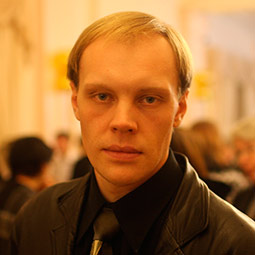 Viktor ElkinPsychologist, co-chair of the Latvian Committee
 Svetlana KrilovaPsychologist, rehabilitation specialist, lecturer
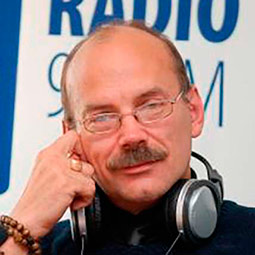 Oleg NikiforovDoctor of psychology, co-chair of the Latvian Committee
Also on this site: About us · History · Specialists · In the media · Questions · Myths
Bringing loved ones back
from cults
You have lost someone close to you, and it is shocking and leaves you feeling helpless. You are stunned by how suddenly their personality, interests and values have changed, and how they have turned their back on old friends and family. It is hard to know how to respond to the hostility or the silent treatment from a person you were so close to and trusted not long ago, and from everyone who does not accept their new beliefs.
How do you go on living, talking and interacting with a member of such a group? Sometimes the power of a controlling group seems so great that the process looks irreversible.
But it is not
Controlling groups use specific psychological techniques to change a person’s mind and identity. Today, various methods of helping in cases of psychological abuse by controlling groups have been developed and tested, but there is no universal method. When choosing how to help, we weigh many factors: what made your loved one vulnerable to this kind of influence, their personality, the social environment they were in before joining the group, and much more.
That is why only a thorough assessment of each case lets us choose the most effective tools. In the Antisekt project, there are three kinds of counselling to help a person break free of mind control in a controlling group:
Information consultation
At this consultation we give detailed information about the controlling group your loved one has joined and reveal the facts it hides: the history of the organisation and the biography of its leader.
This is needed to work out a strategy for freeing your loved one from coercive influence.
Psychological consultation
In this project, a psychological consultation is not just a conversation with a psychologist. It is focused work to free a person from the coercive influence of a controlling group. Unlike classical counselling, this kind of consultation is held with the relatives of the group’s member.
A person inside a controlling group does not ask for help themselves, because they see every area of life only through the lens of the group’s teaching. It is their relatives who come to the psychologist, and together we develop a strategy for communication and behaviour aimed at restoring the person’s ability to think independently.
Stages of the work:
- Rebuilding the relationship with loved ones.
- Awakening critical thinking.
- Developing readiness to make their own decisions.
Legal consultation
The legal consultation assesses the lawfulness of the organisation’s actions toward the person who belongs to it, toward their relatives and toward society, under current law.
If violations are found, we help to prepare complaints to law enforcement and the courts.
Psychological rehabilitation
for former cult members
Svetlana Krilova: ten years in a controlling group
A personal story of how she spent ten years in a controlling group, how she began to doubt, and how she found her way out.
A 15-minute video.
You have left a controlling group, or you are only thinking about leaving, and right now it is hard: emptiness, fear, guilt, mistrust. This happens to many people who have been through it, and it is possible to get through it. You will be understood and accepted here. Some of our specialists were in a controlling group themselves and know from the inside what it is like.
What may be happening to you right now
When a person has survived psychological abuse in a controlling group, it is hard to trust people again and find their place in the world. The fear of being deceived again gets in the way of moving forward, using your talents, building close relationships. Phobias often appear, along with guilt, a sense of emptiness inside, anger at yourself for letting yourself be fooled, and regret over the time wasted. Sometimes doubts come: was leaving the right thing to do?
Why it is so hard to find help
The people around you sincerely want to help, but without understanding the subject they often make things worse. Relatives say careless things, psychologists do not understand what you have been through, representatives of traditional religions reproach you. All of this stands in the way of finding peace of mind again. The person withdraws even further, sinks into depression, looks for a way out in alcohol, drugs or other destructive groups. And there is almost nowhere to turn: in the post-Soviet region only a handful of specialists work with former controlling group members, and only one-to-one. There are no rehabilitation centres, and group rehabilitation, which has worked well in the West, is not used.
When there is almost no help, it matters all the more to hear from someone who has walked this path herself.
Rehabilitation programme
There used to be almost no help like this in the post-Soviet region. Now there is: a programme of psychological rehabilitation for former controlling group members. It is based on psychological research into the problems and experiences people face after leaving a controlling group, on many years of experience of our specialists (for the past ten years they worked with controlling group survivors at the Latvian Committee), and on the experience of Western rehabilitation centres for former controlling group members.
How we will help you
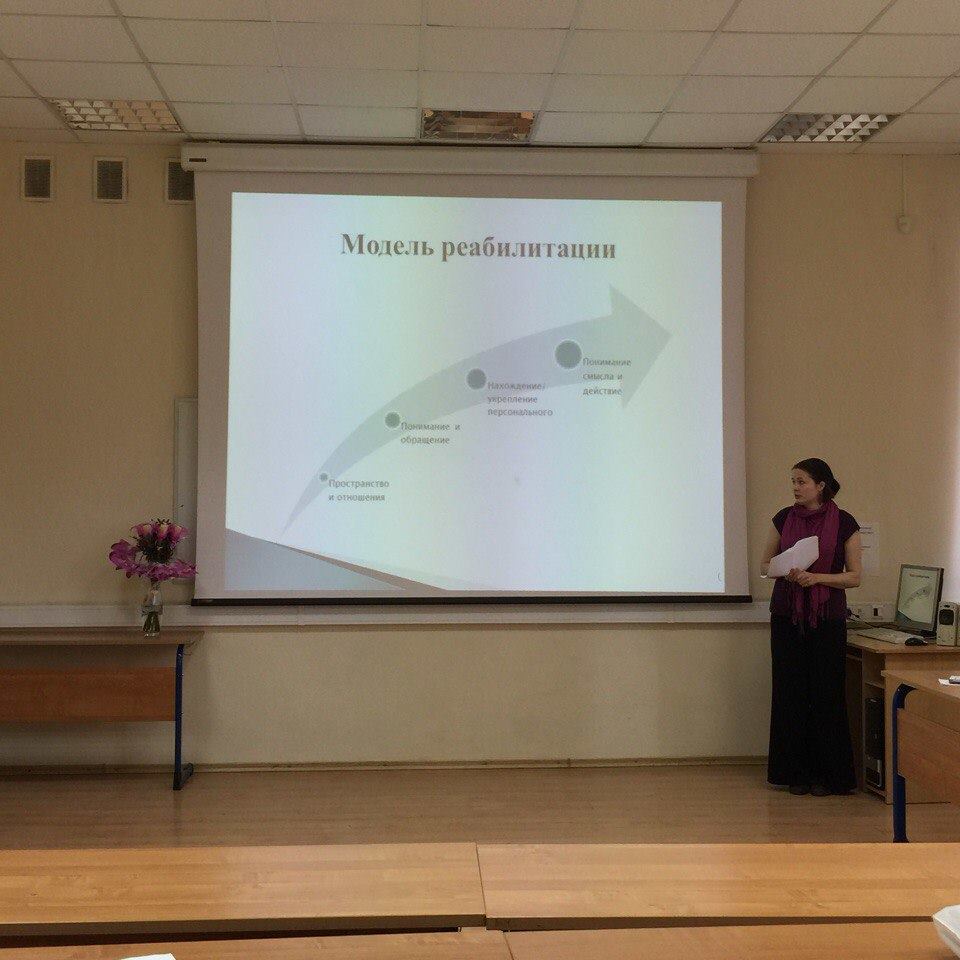
You can choose one of two options: one-to-one sessions with a counsellor, or group work. In a group you will meet people who went through the same thing and came out of it. But former members often find it hard to trust an unfamiliar group, even one with a similar story, so it is better to start by working one-to-one with a specialist.
The programme is led by Svetlana Krilova
Master’s in Psychology (HSE University, Moscow) and Master’s in Philology (University of Latvia, Riga). Both master’s theses were on controlling groups. Author of the rehabilitation programme; has worked at the Latvian Committee since 2011.
Website: krilova.org · Telegram: @krilovaorg
Lectures
and practical workshops
Do you want children, students and colleagues to know the truth about controlling groups, not the scare stories?Our lecturers will run a session for your audience: a school, a university, an organisation or a group of parents.
The course modules are adapted for several audiences:
- The general public
- Parents
- Secondary-school students
- University students
- Professionals who encounter the problem of controlling groups in their work (teachers, psychologists, social workers, law enforcement and emergency-service staff)
Our lecturers can be invited by schools, universities, state and public organisations, and private individuals.
To arrange a session, please contact us well in advance to agree the time, place, target audience and other practical details.
Why this course exists
What is circulated online and in the media about controlling groups usually boils down to rumours and scare stories along the lines of “controlling groups zombify people and take their flats”. As a rule, reliable information comes only from the websites of centres and individual specialists who research such organisations. So when a person comes face to face with a controlling group, they are “charmed” by a set of manipulations that look nothing like zombification or aggressive claims on their property. The relatives of a person who has joined a controlling group start bluntly explaining their mistakes to them, and as a result drift further away from them and merely push them toward the destructive organisation. This situation was the reason for developing a short course of lectures and seminars on the subject.
Lectures and workshops you can book
1. Lecture “Controlling groups: definitions, signs, facts”
Listeners learn what controlling groups are and how they differ from other organisations. The history, teachings and hidden sides of the most notorious controlling groups that can be met in Russia are briefly presented. Special attention is paid to the signs by which they can be recognised.
2. Lecture “Techniques of psychological influence in controlling groups”
Listeners learn about various ways of influencing a person, including suggestion, manipulation, group pressure, intimidation, deception and others. How they differ from non-coercive methods of influence is shown. Examples are given of how exactly these methods are used in controlling groups.
3. Lecture “How to help a person who is in a controlling group”
Listeners learn how to behave if a loved one has become dependent on a controlling group, how not to lose contact with them, and what to do to restore their ability to think independently.
4. Lecture “How to protect teenagers from controlling groups”
Listeners learn what attracts teenagers to controlling groups and how the adolescent identity crisis can be used to draw them in. Recommendations are given on preventing such risks, along with information on what to do if the problem does arise.
5. Lecture “The formation of a new identity in controlling groups”
Listeners learn how our identity (our sense of who we are) is formed and the ways in which controlling groups break it down. A model is shown of how a new identity is created that is based only on the organisation’s values and subordinates or displaces the former self-image.
6. Lecture “The midlife crisis as a risk factor for joining a controlling group”
Listeners learn about the change in outlook that comes in midlife (the existential crisis) and about how controlling groups can exploit it.
7. Lecture “How to live alongside a member of a controlling group”
Listeners learn what a person inside a controlling group feels and goes through, and how to talk to them so as not to make the situation worse or fall under the organisation’s influence themselves.
8. Lecture “Interacting with people who have left a controlling group”
Listeners learn how to talk to people who have left a controlling group in a way that does not deepen their trauma. Special attention is paid to preventing the risk of relapse or of moving into other self-destructive behaviour.
9. Workshop “Techniques of psychological abuse and how to defend against them”
The workshop shows the various methods of psychological abuse used in controlling groups and demonstrates ways of defending against them. Each participant can practise them on their own.
10. Workshop “Manipulation of logic in persuasion”
The workshop shows the strategies of logical manipulation that controlling group members use to confuse the person they are talking to and persuade them of their postulates.
Assessment of signs
of social danger
Do you need to know whether an organisation is dangerous to people and to society?We assess the signs of social danger and prepare a detailed opinion: for a court, an authority, an institution or a foundation.
An assessment of religious and non-religious groups may be needed in the following cases:
- Civil court proceedings in which one of the parties is an organisation, or its representatives, united on the basis of a creed or an ideology.
- Procedural action by law enforcement when administrative or criminal cases are opened in which the persons involved are representatives of organisations united on the basis of a creed or an ideology.
- Deciding whether various state and non-state organisations, departments, and educational, social and medical institutions should cooperate with organisations united on the basis of a creed or an ideology, where information about them is incomplete or contradictory.
- Deciding whether state and non-state foundations should award grants, subsidies and other funding to projects of organisations united on the basis of a creed or an ideology, where information about them is incomplete or contradictory.
What you will receive
As a result of the assessment you receive a detailed opinion on whether the organisation shows signs of social danger, how pronounced they are, and how they manifest themselves.
How we carry out the assessment
An assessment of signs of social danger is carried out for organisations united on the basis of a creed or an ideology. In the course of the work we analyse the various aspects of an organisation’s totalitarian character that lead to destructive consequences for the individual and for society. We evaluate the organisation’s structure, its principles of governance, the degree of interference in and control over members’ lives, the adequacy of the demands placed on them, and the extent and specific nature of the psychological-abuse techniques the organisation uses.
All available sources of information are used as research material: literature, websites, audio and video. The accounts of current and former members of the organisation are taken into account, as well as the opinions of other experts, if there are any. In special cases our expert may carry out participant observation, and information obtained from confidential channels may be used.
About us
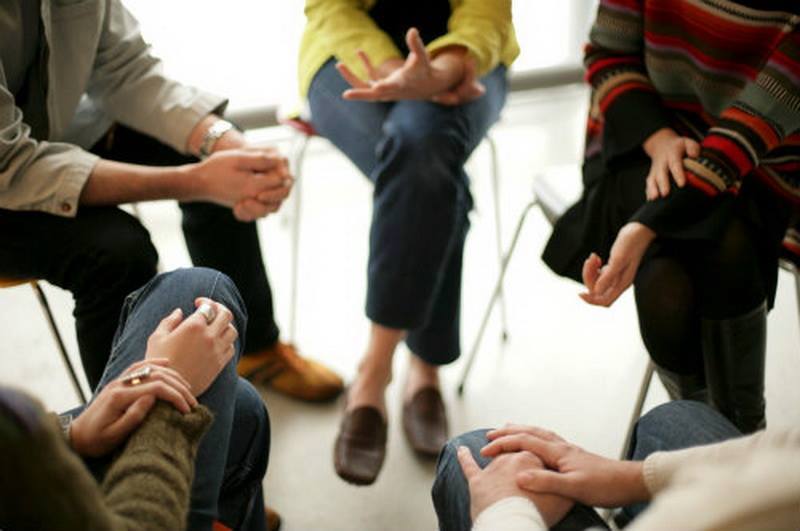
This project was founded by a group of specialists who have spent many years working in the EU countries and in Russia on helping people affected by psychological abuse from controlling groups.
The aim of the project
To help those harmed by the activities of controlling groups, and to prevent the coercive methods of psychological influence that these groups use on individuals.
What we do
- Information, psychological and legal help for people who have lost loved ones to controlling groups, so that those loved ones can return to a full life.
- Psychological help for former controlling group members in overcoming the traumatic effects of the coercive influence they experienced.
- Public education about the dangers that controlling groups pose, through educational events and publications in the media.
- Training for professionals who may encounter the problem of controlling groups in their work.
- Assessments of groups that may show signs of being controlling groups, looking at the social and psychological threats they pose to individuals and to society.
How the project began
The work began in Latvia more than twenty years ago with a group of like-minded people who were among the first in the country to speak publicly about psychological abuse. The public movement later grew into a professional organisation, the Latvian Committee, whose history you can read in more detail here. Over the years it has built up great experience in helping people harmed by controlling groups.
From 2011, people from Russia began to contact us. In the following years the Committee’s staff provided advice and expert help to many people and carried out several scientific studies. Our specialists were periodically invited as experts to Russian federal television channels. As the number of requests grew, in 2017 we decided to work in the Russian Federation on a permanent basis.
History
We have been working since 1995.From the first public discussion to professional help for families and scientific research: this is how it all went.
How it began: 1995–2003
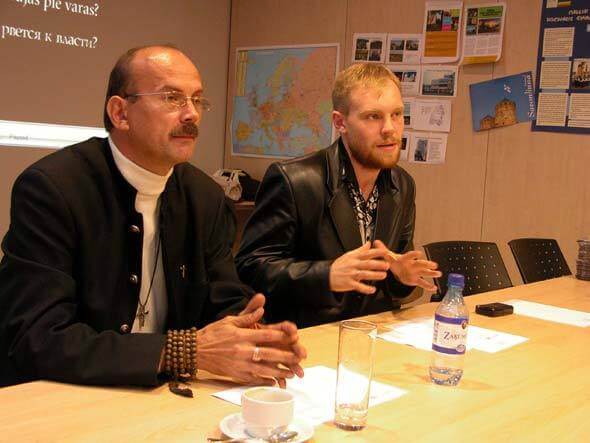
October 1995: a group of activists from the Russian Youth Club spoke out against recruitment in what was then the largest destructive organisation in Latvia, disrupting the reception of a dozen and a half new converts with a well-prepared discussion. After this the participants continued their educational work, beginning to collect information about other similar organisations active in Latvia: where they were based, their doctrine, their numbers and their activities.
1996: the group’s activists organised the first picket in Latvia against destructive organisations, opposite the Riga Sports Manege, where the largest organisation periodically gathered up to six thousand people. Half of them were guests invited to a “festival-concert”, under cover of which new followers were recruited en masse.
As a result of the action, a considerable share of the people invited to the “concert” received alternative information about the event. For the first time the media began to cover the threat of destructive organisations, and such actions were repeated every year until 1999 inclusive.
1997: the decision was made to turn the group of activists into the Committee for Combating Totalitarian Cults (legally, until 2007, it operated as a structural unit of two public organisations).
1999: the Committee’s activists were invited to a conference of the Religious Affairs Department of the Ministry of Justice of the Republic of Latvia, where the problem of destructive organisations was discussed at the level of the state.
2001: a picket was held outside the Latvian parliament demanding better legislative measures to oversee the activities of various destructive organisations.
From 2000 to 2003, information campaigns with mass distribution of printed material describing the real history of destructive organisations that disguised themselves as various educational and charitable societies were held repeatedly.
Professional help: from 2004
2004: the second, professional stage of the Committee’s work begins. The first specialists (psychologists and lawyers) appear, working with victims of psychological abuse in destructive organisations. The decision was made to give up mass actions and concentrate on narrowly professional activity.
At one of the psychological centres, regular appointments for those affected begin, along with legal and psychological help for the relatives of members of destructive organisations.
2005: informational materials were published about attempts by some organisations to quietly get their representatives into power. One of the Latvian parties had actively cooperated with a group of neo-Pentecostal organisations, but thanks to information produced with the Committee’s support, their influence was significantly weakened.
2006: a round table was held with representatives of all the parties standing in the new parliamentary election. Questions of reforming legislation to protect citizens from the influence of destructive organisations were raised.
2007: the Latvian Committee for Combating Totalitarian Cults is registered as an independent organisation. It is headed by Doctor of Psychology Oleg Nikiforov and psychologist Viktor Elkin. Its permanent staff includes lawyers, specialists in personal protection and educators.
2007: the organisation becomes a member of FECRIS, which opens the way to international cooperation.
Working with people from Russia and research: from 2011
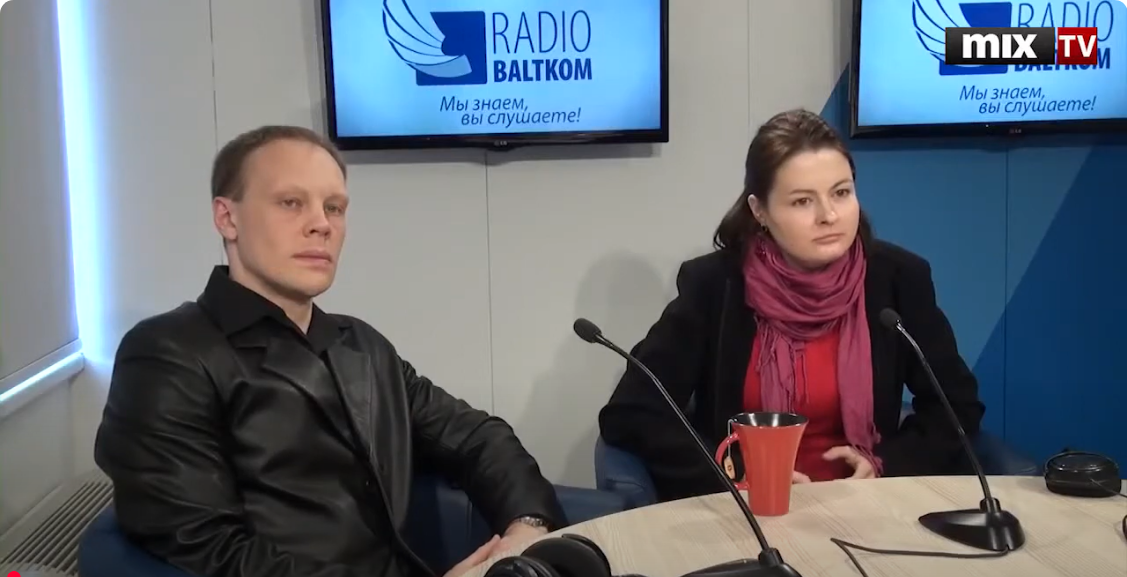
2011: the activists begin working with people from Russia. From 2012, representatives of the Committee regularly appear as experts on federal television channels.
2013: expert help was given in a court case in which parents lost their only son because of a group’s influence.
2013–2016: studies in psychology and sociolinguistics were carried out, resulting in:
- Identifying and systematising the signs of totalitarianism in religious groups.
- Creating a method for analysing religious groups for totalitarianism.
- Research into the psychological trauma of people who have left controlling groups.
- Developing a rehabilitation method for former members of controlling groups.
- An analysis of how the word used for such groups is understood linguistically in the Russian-speaking world.
Today: the Committee’s specialists continue to provide consultations, public education and research in the field of protection from psychological abuse and control. The work is carried out both in Latvia and in Russia, in active cooperation with the media.
Specialists
Click a card to read more about each specialist.
Viktor ElkinPsychologist, co-chair of the Latvian CommitteeSvetlana KrilovaPsychologist, rehabilitation specialist, lecturerOleg NikiforovDoctor of psychology, co-chair of the Latvian CommitteeGet in touch
Viktor Elkin
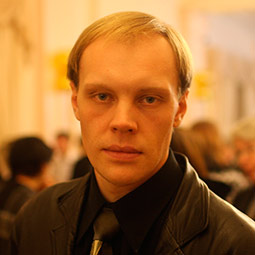
Psychologist, lecturer, expert.
Helps with: bringing loved ones back from controlling groups, lectures and practical workshops on psychological safety, expert assessments.
Co-chair of the Latvian Committee.
Psychologist, Master of Psychology. Completed postgraduate studies at Lomonosov Moscow State University and is currently preparing to defend a dissertation on “Social and psychological abuse in totalitarian religious groups”. Has a number of publications and conference papers on the problem of totalitarian controlling groups.
Since 2004 he has regularly counselled the relatives and close ones of controlling group followers in order to free those followers from social and psychological abuse. He gives lectures and practical workshops at various state and non-state organisations. He is the author of expert opinions for court cases involving controlling groups in Latvia and Russia. He has advised Latvian law enforcement officers on the psychology of controlling groups. For more than twenty years he has spoken actively on this subject in the Latvian media. Since 2012 he has periodically been invited as an expert to Russian federal television channels.
Svetlana Krilova
Psychologist, rehabilitation specialist, lecturer.
Helps with: psychological rehabilitation of former controlling group members; lectures on the inner world of a person inside a controlling group
Master of Psychology (HSE University, Moscow), Master of Philology (University of Latvia, Riga). Both master’s theses were devoted to research on controlling groups. In her psychology thesis she studied how followers experience active membership and the time after leaving. In her philology thesis she examined the sociolinguistic aspects of the concept of “sekta” in the post-Soviet space.
Drawing on the existential-analytic approach of Alfried Längle (a student of Viktor Frankl), she developed a programme for the psychological rehabilitation of former controlling group members. She has taken part in several scientific conferences (Moscow State University, RUDN University, HSE). She has scientific publications in psychology and sociolinguistics. Since 2011 she has worked at the Latvian Committee. She has completed 735 academic hours of training in existential analysis (2014–2016). Member of ICSA and the British Psychological Society (BPS).
Oleg Nikiforov
Doctor of Psychology, associate professor, lecturer, expert.
Helps with: lectures on the social and psychological prevention of controlling groups; expert assessments.
Co-chair of the Latvian Committee.
Doctor of Psychology (defended at the University of Latvia, 1994), associate professor (since 2003). Has taught psychology and pedagogy at many Latvian higher education institutions, including the University of Latvia, Daugavpils Pedagogical Institute, Riga Aviation Institute and the Higher School of Psychology. Was head of the Department of Psychology at the Riga Academy of Pedagogy and Education Management.
Since the early 2000s he has worked continuously at the Baltic International Academy, the largest non-state university in the Baltic states, and lectures at the Riga Catholic Theological Seminary. By invitation he also teaches periodically at other educational institutions. He teaches courses in general psychology, social psychology, personality psychology, psychodiagnostics, ethnopsychology, forensic psychiatry, pedagogy, Christian anthropology and psychology, and epistemology. He has adapted several methods for researching personality and intelligence. He has supervised numerous students’ qualifying theses, has prepared more than 70 Masters of pedagogy and psychology, and has supervised 3 doctoral dissertations. He has many scientific publications and is the author of several books and monographs.
In the media
Our specialists have appeared as experts on television.Broadcasts from different years, from our YouTube channel (in Russian).
Morning on Baltkom
Viktor Elkin and Svetlana Krilova on the Baltkom TV channel’s morning show: about controlling groups, about helping families, and about those who have left a controlling group.
Contact us
Privacy policy
This page explains what happens to the data you send through the form or write to us directly. We try to collect as little as possible.
Who is responsible for the data
The data is processed by the Antisekt project (antisekt.com). For questions about your data, write to antisekt@inbox.lv.
What data we receive
Your name, phone number or email, and the text of your message. When you describe your situation, write only what you are comfortable sharing. If you write about health, beliefs or other personal matters, we use it only to reply to you.
Why, and on what basis
Only to reply to your enquiry and to arrange a consultation, lecture or assessment. The basis is your consent: you give it by sending the form or writing to us, and you can withdraw it at any time.
Who sees it
The project specialists who respond to enquiries. We do not sell the data or pass it to third parties, except where the law requires it. The form on the site opens your email app: the message reaches our address through your email provider.
How long we keep it
As long as is needed to reply and to work on your enquiry. After that, the data is deleted.
Cookies and third-party services
The site has no advertising or analytics, and your browser stores only the language you chose. Fonts load from Google Fonts, videos are played by YouTube (in no-cookie mode), and some photos load from antisekt.com. These services can see your IP address.
Your rights
You can find out what data we hold about you, ask us to correct or delete it, restrict or object to its processing, and withdraw your consent. To do this, write to antisekt@inbox.lv. If you believe your data has been handled improperly, you can contact the supervisory authority (in Latvia, the Data State Inspectorate, Datu valsts inspekcija).
Questions and answers
Questions that are scary to ask out loud.If your question is not here, write to us: we will reply personally.
If your loved one is in a controlling group
How can I tell if it is a controlling group?
Look not at what the group believes but at what it does to a person: does it control their time, contacts and money, cut them off from loved ones, shame them for doubting, make leaving mean losing all their friends? There is more on the home page.
They don’t want to talk to me. What should I do?
Don’t argue and don’t push: this usually makes a person hold on to the group harder. Stay in touch, listen, show interest, recall the good things you share. There is a short memo on the page “My loved one is in a controlling group”.
Does my loved one have to come to the consultation themselves?
No. A person inside a controlling group usually does not ask for help themselves, so the consultation is with you: together we work out a strategy for communicating and behaving, to help them think independently again.
Will you take them away by force?
No. We work with you and with your relationship. The aim is to give the person back the ability to think and make decisions for themselves.
What kinds of consultation are there?
Three: information (about the group, the facts it hides and its leader’s biography), psychological (a strategy for communicating with your loved one) and legal (an assessment of whether the group’s actions are lawful). We will suggest where to begin after your message.
If you have left a controlling group
I have left a controlling group but I feel terrible. Is that normal?
Yes. Many people feel lost, guilty, lonely and afraid after leaving: along with the group, they often lose their whole circle and the picture of the world they had. This is not weakness. There is help: the the rehabilitation programme programme.
Do I have to prove that it was a controlling group?
No. We are interested in your experience and in what you are going through now, not in an argument about the name.
If you need an assessment or a lecture
Do you carry out assessments of groups for courts and authorities?
Yes. We assess the signs of social danger in a group and prepare a detailed opinion: which signs are present, how pronounced they are and what is specific about them. There is more on the “Assessment” page.
Are you against all non-traditional groups?
No. We do not condemn religious or non-religious groups indiscriminately. We help specific people who have been harmed, and we look at the signs: what the group does to a person.
Is it a controlling group or just a strict group?
Between a healthy group and a destructive controlling group there is a whole spectrum. What matters is whether there is control, pressure, isolation, fear and no real freedom to leave. Write to us and we will help you assess a specific group by its signs.
Do you give lectures for schools and organisations?
Yes. The modules are adapted for the general public, parents, secondary-school students, university students and professionals. There is more on the “Lectures” page.
Didn’t find your question?
Myths about cults, and the truth
Much of what we think we know about controlling groups is wrong.Because of these myths, families lose time and people who have left feel ashamed of themselves.
Anyone can, most often at a hard time in life. Recruitment works as psychological influence, not as a test of intelligence.
From the outside a group can look like a course, a community, a church or a “dream team”. What matters is not how it looks but what it does to a person.
No. Controlling groups can be religious or non-religious, and so can relationships. We care not about faith but about the signs of control and dependence.
Manipulation begins when a person is not told everything: the aims, the money, the obligations and how hard it is to leave later. A choice made without the truth cannot be called an informed one.
Arguing and “exposés” more often strengthen the attachment to the group. What works is calm contact, interest and patience. See the memo.
Often it is only the beginning: guilt, emptiness, the loss of friends and of meaning. That is exactly what the the rehabilitation programme programme is for.
We are for signs, not for labels. We do not brand groups indiscriminately, and we help specific people.
Sometimes it does. But if the group controls, pulls a person away from loved ones and shames them for doubting, it is better not to wait and to understand what is going on first.